
The Ultimate Patagonia Itinerary: 2 Weeks in Argentina & Chile

Patagonia is a geographic region in South America encompassing the southern regions of Chile and Argentina. A nature lover’s paradise with pristine blue lakes, glaciers, rivers and wildlife unique to this region – guanacos and the elusive pumas to name a couple. We spent about two weeks exploring both the Chilean and Argentinian sides of Patagonia and were awestruck by the sheer vastness and beauty of both these regions.
We hiked the famous W trek in Chilean Patagonia and cannot recommend it enough for someone looking to immerse themselves in the remote wilderness of Torres Del Paine National Park. On the Argentinian side, we spent a few days exploring the remote mountain village of El Chalten in Los Glaciares National Park, also known as the trekking capital of Argentina. The hikes to the base of Mt. Fitz Roy and Cerro Torre have left a lasting impression on us, to say the least.
In this guide, we aim to break down things to do on both the Chilean and Argentinian regions of Patagonia, details of the W Trek and how to plan for it, how to visit the Perito Moreno Glacier, crossing borders between Chile and Argentina, where to stay and everything else that you may need to know before making this trip happen.
Note: We have split this blog post into two sections: Chile Patagonia and Argentina Patagonia
Read our Detailed Post on Self-Guided W Trek Itinerary to prepare for your Patagonian Adventure
Things to know before visiting Patagonia
Patagonia Chile
- How to get to Torres Del Paine National Park
- Where to Stay
- Getting Around
- Things to Do in Torres Del Paine National Park
Argentina Patagonia
Best Time to Visit Patagonia
By the virtue of its location in the Southern Hemisphere, Patagonia experiences summer between the months of December and February. The long, warm days are ideal for hiking and outdoor activities. But these months also bring in gusts of fierce Patagonian winds. As with most places, travel in these months could get expensive and crowded.
November marks the beginning of Spring and is the shoulder season for travel. Accommodation prices are lower and crowds are thinner. An ideal season for photographers as wildflowers are in bloom and spotting wildlife is easy.
March and April are the autumn months and shoulder season for travel. Expect fewer crowds and lower accommodation prices. Another popular time of year among photographers. With cooler temperatures, not-so-strong winds and beautiful autumn colors, this is a great season for hiking.
May through October is officially winter. Most attractions and accommodations are closed this time of year.
Note: Highly recommend carrying layers and warm clothing. The weather could change drastically and unexpectedly, occasionally bringing rain showers and snow even in the Summer months. Wind gusts in the summer months are known to be notoriously strong in all of Patagonia.
Do I need a car to get around Patagonia
Getting Around in Puerto Natales
Car Rental
This option gives you the flexibility of exploring attractions around Puerto Natales as well as traveling into Torres Del Paine and back at your convenience. This option especially suits those that are not embarking on multi-day hikes like the W or O treks and instead choose to base themselves at Puerto Natales and explore Torres Del Paine through Day Hikes. Keep in mind that this is a more expensive transportation option.
Note: Be aware that most rental car companies do not allow cars to be driven internationally into Argentina. If you plan to drive to El Calafate in Argentina, make sure to check with your rental car company.
Buses & Taxis
If your intention of arriving at Puerto Natales is to get to Torres Del Paine and not visiting attractions outside of the city center, you could entirely skip renting a car. Most places including restaurants, hotels, hostels, adventure outfitters and tour companies are at walkable distance from the city center at Plaza de Armas. Taxis are easily available if needed.
We chose to explore Puerto Natales by foot and use taxis as needed. Since we were planning on doing the W trek, we used the bus service to get in and out of Torres Del Paine National Park and found this option to be less expensive and convenient.
Bus connectivity from Puerto Natales to Torres Del Paine National Park is excellent. Find the most updated schedules of the two private companies that operate buses to and from the National Park here: Bus Sur and Turismo Zaahj.
Patagonia Map
Patagonia Chile
Torres Del Paine National Park with its distinctive three granite peaks of the Paine mountain range, valleys, glaciers and rivers is the core of Chilean Patagonia. It is truly a place that deserves to be explored and preserved for generations to come. The remote little town of Puerto Natales is the gateway to Torres Del Paine National Park. The distance between the two being approx 110 k.m or about 1.5 hours by road.
Remember to Purchase Entrance tickets to Torres Del Paine National Park in advance.
How to get to Puerto Natales
Fly to Puerto Natales Airport (PNT) – Find direct flights from Santiago, the capital of chile to PNT. This is the closest commercial airport to Torres Del Paine NP but is generally expensive.
Fly to Punta Arenas Airport (PUQ) – This option is considerably cheaper but makes the journey longer. From Punta Arenas you can either rent a vehicle or get on a public bus to reach Puerto Natales. The connectivity and frequency of buses is convenient and the buses are comfortable. Check out this link for further transportation options.
Book bus ride between Punta Arenas and Puerto Natales
How to get to Puerto Natales town from airport/bus stand
You could rent a car but we don’t recommend it as it’s easy get around the small town of Puerto Natales by walk. Uber and local taxis are also easily available and not expensive.
Where to Stay in Puerto Natales
Puerto Natales is a typical gateway town, perfect to base yourself in when visiting Chilean Patagonia. The town has a plethora of hostels for backpackers and budget travelers. Note that although they are hostels, they provide comfortable accommodation with clean facilities and their common lounges are an opportunity to meet fellow travelers from around the world. Some hostels even offer complimentary breakfast.
Our pick of hostels in Puerto Natales: Wild Hostel, Treehouse Patagonia, El Patagónico, YaganHouse, Puma House, Nikos II Adventure
Pro Tip: Most hostels will store your luggage at a nominal to sometimes no cost while you enjoy your day trip or multi-day trip to Torres Del Paine NP.
Likewise, the town also offers mid-range to upscale accommodation options.
Our pick of upscale accommodations in Puerto Natales: The Singular, Remota, Noi Indigo, Weskar Lodge
How to reach Torres Del Paine National Park
We highly recommend utilizing the excellent network of buses and ferries to get to the park from Puerto Natales. The buses are comfortable and frequent providing plenty of opportunities to spot wildlife unique to this region. Depending on your plan for the day, you could get off at any of the four stops listed below.
Remember to Purchase Entrance tickets to Torres Del Paine National Park in advance.
Laguna Amarga Stop
- O-circuit hike
- W trek from East to West
- Day hiking Mirador Los Torres, Laguna Azul and Lago Nordenskjold trails
- Staying at Hotel Las Torres/Refugio Torre Central
Pudeto Stop
This is a ferry/catamaran dock stop for:
- W Trek from West to East. You will need to take a catamaran/ferry to Paine Grande from here
- Staying at Paine Grande hotel/refugio/campsite
- Day hiking Salto Grande Waterfall, Mirador Cuernos, Mirador Frances & Mirador Britanico
Camping Pehoè Stop
- Staying at Explora Patagonia or Hosteria Pehoé/Pehoé campsite
- Day hiking Mirador Cóndor
Lago Grey Stop
- Staying at Hotel or taking catamaran/ferry to Refugio Grey
- Starting point of W trek from West to East instead of starting from Paine Grande. You will need to take a ferry/catamaran from Hotel Grey to Grey campsite.
- Day hiking Glacier Grey Viewpoint (taking catamaran/ferry to Paine Grande)
Check out the bus schedules of the two companies that operate transportation to and from the park: Bus Sur and Turismo Zaahj
Note: All the above stops (including catamaran dock at Pudeto) allow for overnight parking if you choose to drive to the National Park from Puerto Natales.

Where to Stay in Torres Del Paine
The best way to fully experience the park is by spending a few days inside the park. Whether you choose to embark on a traditional trekking experience while camping in the wilderness, staying in remote refugios or doing day hikes while staying in some of the hotels with the best views, the park caters to all types of travelers.
Hotels in Torres Del Paine National Park
Hotel Las Torres Patagonia – Located in Sector Torres, this is the closest hotel to the starting point of W Trek and the Base of the Towers Trailhead.
Hotel Grey – Located in Sector Lago Grey on the shores of Lake Grey, this hotel probably has the best views in the park. You can either drive or take a shuttle bus to get to this Hotel. OR use this hotel as the last or first stop on the W Trek depending on the direction of hike.
Hotel Rio Serrano – Located in Sector Rio Serrano on the southern end of the park, the hotel provides spectacular views of the Paine massif. Note that this hotel does not lie on the route of W or O treks.
Hosteria Pehoé (Sector Lago Pehoé) – Located on an island in Lake Pehoe with the best views of the ‘horns’ of the paine range(massif). Note that the hotel does not directly lie on the W or O trek routes but if you do not want to camp or stay in refugios, this is the closest hotel to the central part of W trek. It is about 4km from Pudeto, where the catamaran operates transporting people to Paine Grande over Lake Pehoé.
Note: You can either walk the 4km from Hotel Pehoe to Pudeto or hitchhike a bus ride.
Explora Patagonia – The only luxury resort within park boundaries. Located at the center of the park, close to the middle section of the W trek, the lodge offers private boat transportation to popular trailheads.
Refugios in Torres Del Paine
Refugios are simple mountain huts with basic facilities. In Torres del Paine National Park, they typically cater to hikers embarking on the W Trek and help in breaking the hike down into 3 or 4 sections, allowing hikers to carry a smaller backpack. The refugios are clean, well maintained and offer simple food options, mainly designed to fuel hikers after a long day.
Note: Most of the stay during W Trek would be at campsites that are managed by two private companies – Vertice Patagonia and Las Torres Patagonia. Depending on the refugio, you have the option of renting bunk bed style dorms, private cabins, campsites with fully equipped tents or simply a camp spot to pitch your own tent. We highly recommend booking in advance as accommodation in refugios is very limited and get booked out fast.
We highly recommend using Chile Nativo to customize & book your travel in Patagonia. They offer customized W Trek, O trek & many other activities/packages in the Patagonia region. They take care of end-to-end W trek reservations including accomodation, meals, transportation, etc. They even offer packed lunch for the day of the hike. They will help answer all your questions prior to the trip. We can vouch for their excellent customer service and competitive pricing.
Book now with Chile Nativo*
**Use coupon code “Beyondmustsee” to get a 5% discount on your booking***
| Refugio | Location | Details |
| Torre Central (Las Torres) | At the trailhead of the Base of the Towers hike. This is the starting point of W Trek for those hiking East to West of End point for those hiking West to East. | Accommodation type: Dorm rooms with bunk beds OR premium camping Access: Hiking not required. Official booking site: Torre Central(Las Torres) |
| Chileno (Las Torres) | Located approximately midway from Torre Central to the Base of the Towers hike | Accommodation type: Fully equipped Tent Camping Only Access: Hiking required. The best place to stay at to catch sunrise at the base of the Towers. Official booking site: Chileno (Las Torres) |
| Los Cuernos (Las Torres) | Located exactly halfway on the W trek route, at the base of an impressive granite rock formation called Cuernos del Paine or “The Horns” of the Paine range | Accommodation type: Dorm rooms with bunk beds OR private two-person cabins OR fully equipped Tent Camping Access: Hiking required. Official booking site: Los Cuernos(Las Torres) |
| Camping Francés (Las Torres) | Approx 1.5km from Los Cuernos. When trekking the W or O circuits, you will either stay at Los Cuernos or Camping Francés, but not both because of their proximity. | Accommodation type: Dome style accommodation, Fully equipped Tent Camping Access: Hiking Required Official booking site: Camping Francès(Las Torres) |
| Paine Grande (Vertice) | Located on the banks of Lake Pehoé. This is the end point of W trek for those hiking East to West or the starting point for those hiking West to East | Accommodation type: Dorm rooms with bunk beds inside Refugio Paine Grande OR fully equipped Tent Camping Access: Hiking OR boat ride across Lago Pehoé Official booking site: Paine Grande(Vertice) |
| Grey (Vertice) | Located at the Western end of the W Trek | Accommodation type: Dorm rooms with bunk beds OR fully equipped Tent Camping Access: Hiking OR catamaran from Hotel Grey Official booking site: Refugio Grey(Vertice) |
Wilderness camping is not allowed in Torres Del Paine National Park. However, the private companies that manage accommodations at refugios (Vertice and Las Torres) rent out campsites only. This allows you to carry personal camping gear and equipment required to camp in the park. This is also the least expensive accommodation option.
Food in Refugios
When booking accommodation in refugios, there are some meal options to choose from for each day of the hike. Vegetarian options are available for all meals.
Half Board: Includes breakfast & dinner.
Full Board: Includes breakfast, packed lunch & dinner

Torres Del Paine National Park Map (W Trek)

Things to do in Torres Del Paine National Park
The W Trek
The most popular multi-day hikes in Patagonia and for good reason. It is called the W trek for the shape of the route this hike follow. Traversing across the heart of Torres Del Paine National Park, the trek allows you to live the wilderness life while staying in minimalistic refugios with no network connectivity. The hike is typically done over 5 days and 4 nights but can be customized to extend or shorten the duration as well as distance and direction. The hike covers all the major viewpoints in the park and can be made guided or self supported.
Read Our Detailed Post on Self-Guided W Trek Itinerary to prepare for your Patagonian Adventure
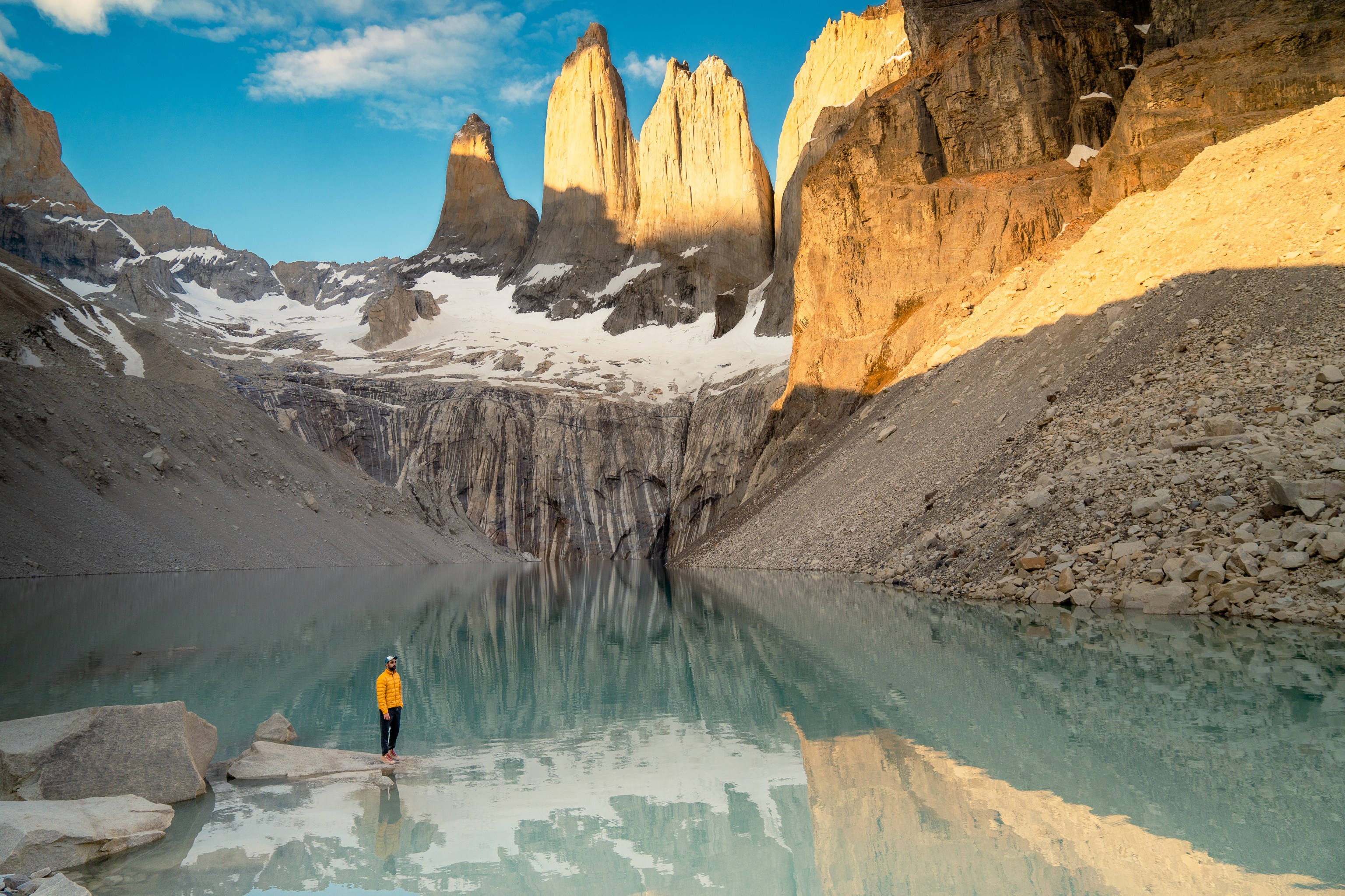
W Trek Patagonia Stats:
Distance : ~50 mile
Time: 4-5 days
Elevation gain: 8956 ft
Rating: Challenging
Highlights: Base of the Towers(Mirador Las Torres), French Valley, Grey lake & Grey Glacier
The O-Circuit
An extended and a more challenging version of the W trek for more serious hikers. Similar to the W trek, the O circuit derives its name from the shaped of the route it follows – loops around the Paine Massif starting and ending at Laguna Amarga. Typically done in 8 days and 7 nights (can be extended or shortened), this trek covers the Dickson Lake with views of Dickson Glacier, the hanging Perros Glacier and the very challenging John Gardner Pass along with the points of interest on the W Trek.
O Circuit Stats:
Distance : ~73 mile
Time: 4-5 days
Elevation gain: 16000 ft
Rating: Strenuous
Highlights: Dickson lake and Glacier, Los Perros lake and Glacier, Grey Glacier via John Gardner Pass, Base of the Towers(Mirador Las Torres), French Valley, Grey lake & Grey Glacier
Day Hikes in Torres Del Paine National Park
There are multiple ways of customizing your experience in the park. Choose from hiking shorter trails to either day hiking or backpacking sections of the W Trek. Take a look at the table below for our top recommendations.
| Hike | Stats | Details |
| Laguna Azul | Distance: 5 miles out & back Elevation Gain: 439ft Type: Easy AllTrails Link | Highlight: Views and reflections of the famous Torres Del Paine Towers in the lake. Recommendation: Skip if hiking Mirador Torres Del Paine otherwise a must do Location: East, approx 20 minutes drive from Laguna Amarga entrance |
| Mirador Torres Del Paine | Distance: 12.5 miles out & back Elevation Gain: 3326ft Type: Challenging/Strenuous AllTrails Link | Highlight: Views and reflections of the famous Torres Del Paine Towers in the lake. Recommendation: Must do. This hike forms the eastern arm of the W Trek Location: East, Hike begins at Torres Del Paine Welcome Center |
| Salto Grande Waterfalls & Mirador Cuernos | Distance: 4 miles out & back Elevation Gain: 557ft Type: Easy AllTrails Link | Highlight: Views of Lake Nordenskjöld, Valle del Francés, and the Cordillera del Paine Recommendation: Must do Location: Central, Near Lago Pehoé(Parking available at trailhead) |
| Short walk from Explora Lodge to Salto Chico Falls | Distance: 1.8 miles out & back Elevation Gain: Mostly Flat Type: Easy | Highlight: Views of the famous Paine Massif Recommendation: Must do Location: Central, Short walk from Hosteria Pehoé |
| Paine Grande to Mirador Britanico via Valle Del Francés | Distance: 6.5 miles out & back Elevation Gain: 1890ft Type: Moderate AllTrails Link | Highlight: 360° panoramic views. Francés Glacier, Cuernos de Paine Recommendation: Must do. This hike forms the central arm of the W Trek Location: Central, Hike begins at Paine Grande Refugio |
| Paine Grande to Glacier Grey | Distance: 14 miles out & back Elevation Gain: 2400ft Type: Challenging AllTrails Link | Highlight: Views of Lake Grey and Glacier Grey Recommendation: Can skip if visiting Perito Moreno Glacier in El Calafate, Argentina. This hike forms the Western arm of W Trek Location: West, Hike begins at Paine Grande Refugio. |
Argentina Patagonia

Argentine Patagonia is loaded with some of the best views in the world and makes for a memorable bucketlist travel destination. Among the highlights are the enormous Perito Moreno Glacier, majestic granite peaks of Mount Fitz Roy and penguin colonies of Tierra Del Fuego.
Our travel to the Argentinian side of Patagonia mainly focussed on Los Glaciares National Park which included visiting the town of El Calafate, Perito Moreno Glacier, the remote mountain town of El Chalten that houses scenic hikes to the base of Mt Fitz Roy and Cerro Torre. Rest of this post will focus on these places.
We highly recommend using Chile Nativo to customize & book your travel in Patagonia. They offer customized booking services for independent hikers in the Argentina Patagonia region including transportation, accommodations and Ice trekking excursions on Perito Moreno Glacier. They will help answer all your questions prior to the trip. We can vouch for their excellent customer service and competitive pricing.
Book now with Chile Nativo*
**Use coupon code “Beyondmustsee” to get a 5% discount on your booking***
How to reach El Calafate
El Calafate and Ushuaia are the two entry towns to the Argentinian side of Patagonia, El Calafate being the primary gateway to Los Glaciares National Park. There are a couple of ways to get to the town of El Calafate:
- Take a shuttle bus from Puerto Natales in Chile to El Calafate, crossing the Chilean border into Argentina. The journey takes about 6 hours and includes processing at the two border posts.
- Fly from Buenos Aires, Ushuaia or Bariloche to El Calafate on LATAM or Aerolineas Argentinas airlines
Note: If you are already in Puerto Natales exploring Torres Del Paine National Park, the best way to get to El Calafate would be by road. There are numerous shuttle buses running between the two towns and are comfortable. Likewise, this also holds true for travelers already in El Calafate, Argentina looking to transfer to Puerto Natales, Chile. We highly recommend booking seats in advance. A few reliable bus companies are Bus Sur, Turismo Zaahj and Bus Bud
Where to stay in El Calafate
The town offers a good mix of places to stay from Backpackers’ hostels to B’n’Bs and luxury hotels. The main street in El Calafate which is also the town center is Avenida del Libertador. We recommend staying in the vicinity of town center for easy access to restaurants, shops and bars. If you are looking for a place with good views, there are budget friendly as well as boutique hotels on the coast of Lago Argentino but slightly away from city center.
Our pick of upscale accommodations in El Calafate: Eolo, Los Ponchos, Hotel Kosten Aike, Xelena Hotel & Suites
Our pick of hostels in El Calafate: America Del Sur, Calafate Hostel, Lago Argentino Hostel, Folk Hostel
How to reach El Chaltén
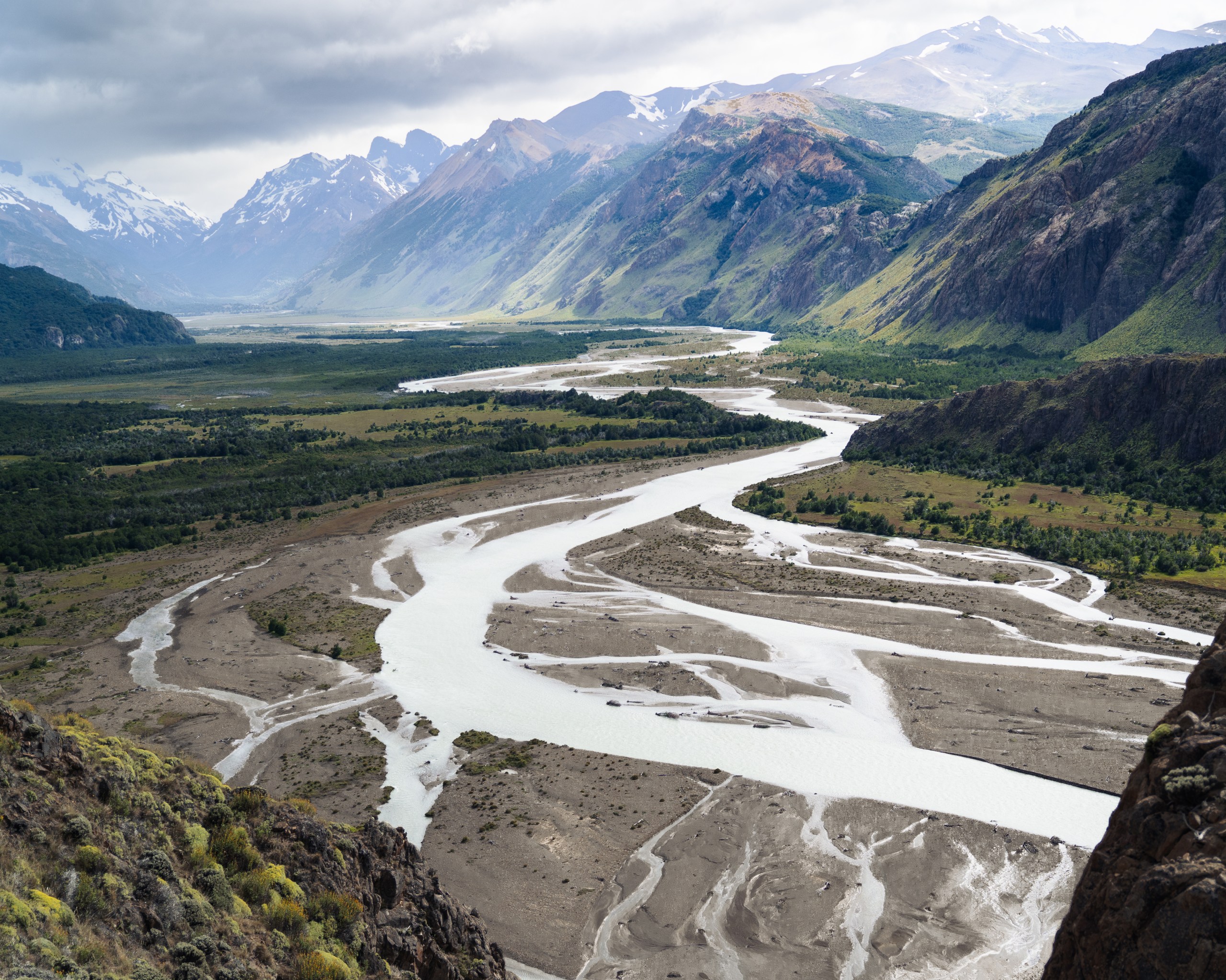
Also known as the trekking capital of Argentina, this little mountain town of El Chaltén houses some of the best albeit challenging hikes in the world.
Car Rental – The drive from El Calafate is about 3.5 hours, not accounting for the stops you may possibly make on the scenic drive to the village of El Chaltén.
Shuttle Bus – The more cost effective option. Try getting on the front seats of the top deck for the best views.
Note: Within the mountain village of El Chaltén, biking and walking are two common ways to get around if you don’t have a rental car.
Where to stay in El Chaltèn
Our pick of upscale accommodations in El Chalten: Explora El Chaltén, Aguas Arriba Lodge, Los Cerros del Chaltén, Destino Sur Hotel & Spa de Montaña
Our pick of hostels in El Chalten: Patagonia Hostel, Rancho Grande Hostel, Hosteria Senderos
If you are looking for a unique stay experience, explore eco friendly glamping in premium domes at Chaltén Camp. The accomodation is in a secluded location with uninterrupted views of Mt. Fitz Roy.
Getting around El Calafate and El Chaltén
We recommend either renting a car or using their excellent network of shuttle buses to navigate between different attractions of Argentinian Patagonia. Car rentals are slightly more expensive but offer the convenience of following your own timings and the freedom of making stops and detours on scenic drives.
On the other hand, using shuttle buses to get around is cost effective. Since the towns of El Calafate and El Chaltén are small and most restaurants and shopping places are easily accessible by foot, this is an attractive option to most visitors.
Uber and local taxis are also a common mode of transportation within El Calafate including to and from the airport.
Things to do in Los Glaciares National Park
(El Calafate)
We highly recommend using Chile Nativo to customize & book your travel in Patagonia. They offer customized booking services for independent hikers in the Argentina Patagonia region including transportation, accommodations and Ice trekking excursions on Perito Moreno Glacier. They will help answer all your questions prior to the trip. We can vouch for their excellent customer service and competitive pricing.
Book now with Chile Nativo*
**Use coupon code “Beyondmustsee” to get a 5% discount on your booking***
Perito Moreno Glacier
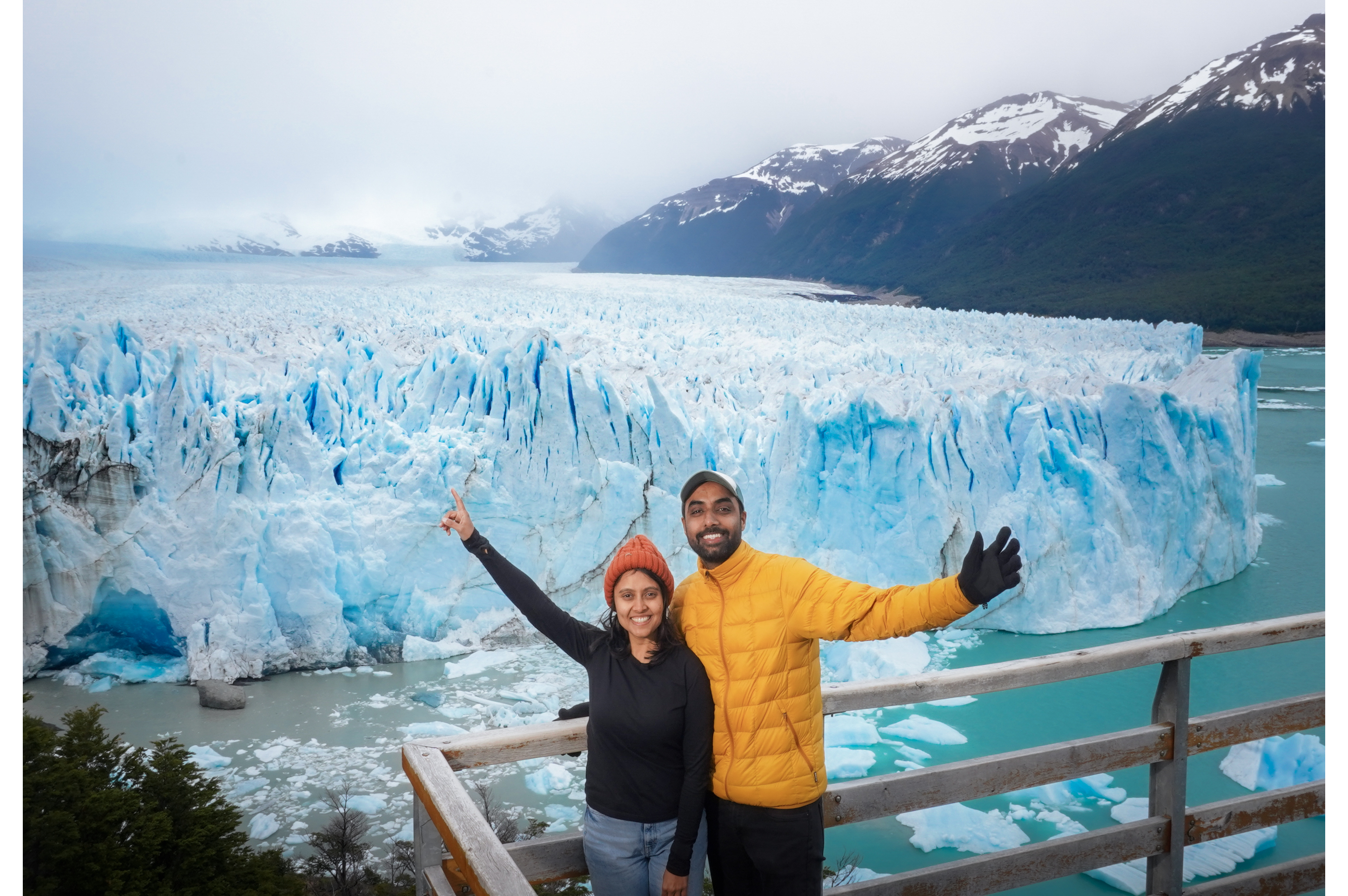
The Perito Moreno Glacier is a part of Los Glaciares National Park. The remarkable scale of this Glacier along with the fact that it is easy to access makes it well worth visiting. If you are lucky, you could catch glacier calving on warm Summer afternoons where huge chunks of icebergs break off and fall into Lago Argentino. Standing in the imposing presence of the glacier is truly an awe-inspiring feeling.
Having said that, due to ease of access, this place is a popular tourist destination with hordes of tour buses arriving between 9 am and 5 pm. Visitors are allowed on the walkways that go near the glacier until 8pm in the Summer months.
How to Get to Perito Moreno
Car Rental – The drive from El Calafate takes about 1.5 hours
Pro Tip: If you have a rental car and are looking to avoid crowds then visiting early in the morning or late in the afternoon would help.
Shuttle Bus – The more cost effective option. Take a bus from the main bus terminal at El Calafate. Some reliable bus companies to explore: Bus Bud, Caltur
Things to do at Perito Moreno
There are multiple tours commencing from El Calafate that offer different ways to experience the glacier depending on your budget:
- Self guided walk on the wooden walkways
- Guided walk tour
- Boat tours on Lago Argentino that take you up close to the Glacier
- Ice trekking on the glacier
- Kayak tour to the Glacier
PeritoMoreno.Com and Caltur are among some of the tour companies offering different Glacier tours and activities.
Things to do in Los Glaciares National Park
(El Chalten)
El Chalten, the mecca of trails in Los Glaciares National Park. The village of El Chalten sits at the base of the world famous Monte Fitz Roy and attracts hikers and climbers from all over the world. The following section goes over the best hikes in this region.
Laguna De Los Tres Hike

One of the most iconic hikes of Patagonia. The trail ends at the base of Mt Fitz Roy with panoramic views of the Argentinian Andes.
Even for experienced hikers, the last stretch of the trail is a slog. Keep in mind that it could get fiercely windy and cold at the top. The wind gusts are strong enough to knock a person down and usually tend to pick up late afternoon so highly recommend wearing and carrying layers.
Pro Tip: After arriving at the lakeshore, you could optionally take the trail that goes left from the lake, up a hill for magnificent views of Laguna Sucia on the left and Laguna de los tres on the right.
There are multiple ways to hike this trail
- Day Hike – This trail makes for a challenging 7-9 hour day hike. Popular option among those looking to get back to the town for a good meal and sleep.
- 2-Day backpacking hike – A popular option among outdoor enthusiasts looking to witness sunrise at the lake with reflections of Mt Fitz Roy. Camp can be setup at Poincenot campsite which is about 2km one-way from the lake and takes approximately 3 hours round-trip.
Laguna De Los Tres Hike Stats:
Distance : 22km Out & Back
Time: 7-9 hours
Elevation gain: 1068 meters
Rating: Strenuous
Trailhead : Parking lot at the end of Avenida San Martin which is the main road of El Chalten
Camping : Yes, free and first-come-first-serve
Campgrounds: Laguna Capri and Poincenot Campground
Laguna Torre Hike

Another classic of the Patagonian Andes, not to be missed. Witness the pointed needle-like granite peaks of Cerro Torre with a lake of floating icebergs at its base. The good part is that this hike is not as strenuous as the Laguna de los tres hike but has equally good views!
The weather is highly unreliable, as is the case with all of Patagonia. Be prepared by carrying layers for extreme windy conditions and rain showers especially in the summer months.
There are multiple ways to hike this trail
- Day Hike – Makes for a 5-6 hour day hike. Popular among those looking to get back to the town for a good meal and sleep.
- 2-Day backpacking hike – A popular option among outdoor enthusiasts looking to witness sunrise at the lake. Camp can be setup at Camping de Agostini which is less than a kilometer from the lake.
Laguna Torre Hike Stats:
Distance : 18km Out & Back
Time: 5-6 hours
Elevation gain: ~ 500 meters
Rating: Moderate but long
Trailhead : Small parking lot at the end of Los Charitos street. Also easily walkable from town centerroad of El Chalten
Camping : Yes, free and first-come-first-serve
Campgrounds: Camping de Agostini
Backpacking Laguna De Los Tres & Laguna Torre
Explore some of the iconic highlights Patagonia while fully immersing in its wilderness by combining multiple trails into a 3-4 day backpacking trip. One of the typical routes combines the Laguna de los tres & Laguna Torre hikes looks something like this:
- Start at the trailhead of Laguna de los Tres. Parking lot at the end of Avenida San Martin which is the main road of El Chalten
- Optional camping at Laguna Capri
- Or continue further on the trail to setup camp at Camp Poincenot
- Take a detour hike from Camp Poincenot to Mirador Piedras Blancas (3 miles out and back, 337ft elevation)
- Embark on a sunrise hike to Laguna De Los Tres Viewpoint with a daypack
- Return to Camp Poincenot, pack up camp, and hike to Camping di Agostini
- Visit Laguna Madre e Hija which are three lagoons namely Madre, Hija & Nieta enroute Camping di Agostini
- Setup camp at Camping di Agostini
- Embark on sunrise hike to Laguna Torre
- Return to Camping di Agostini, pack up camp and hike back to El Chalten via the Laguna Torre trailhead at the end of Los Charitos street
Multi-Day Hike Stats:
Distance : 35km Loop (not accounting for the detour to Mirador Piedras Blancas)
Time: 3 days and 2 nights
Elevation gain: 1355 meters
Rating: Challenging
Trailhead : Parking lot at the end of Avenida San Martin which is the main
Camping : Yes, free and first-come-first-serve
Campgrounds: Laguna Capri (Optional), Poincenot campsite, Camping de Agostini
Note: Since the campsites cannot be reserved in advance, arrive early to ensure a spot
 Beyond Must See
Leave a comment